Rothar Routes

Cycle routes & pilgrim journeys in Ireland and Europe …..

Posts by Turlough

Symon Semeonis

I read an interesting article about this little known Irish pilgrim, Symon Semeonis some years ago and it was great to hear this radio documentary over the Christmas. The Friars Walk. This is the only surviving narrative of an irish pilgrim in the period.

I never understood the circuitous route he took to get to Jerusalem but the documentary explains it very well.

Have a listen.

It was a great Year!

We like to give out about the weather – but it was truly a great summer and autumn for the bike. Almost every day I was out the sun shone, there was hardly a breeze as I cruised along abandoned country roads across counties Carlow, Kilkenny, Laois, Kildare, Wicklow and Wexford.

Tree and bushes were in full bloom, bird song accompanied every turn of the pedals, nature was at it’s finest.

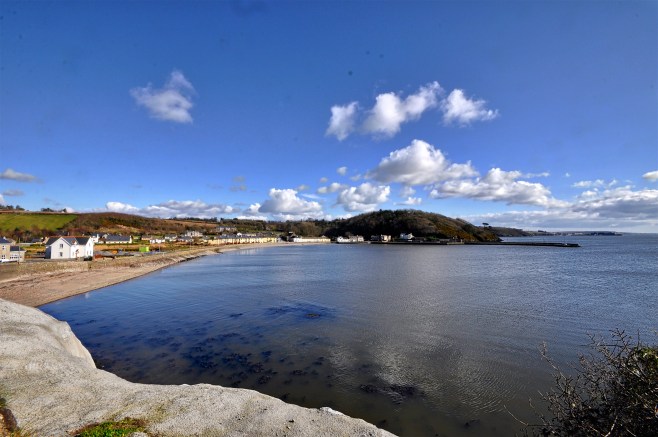
Here are a few photos taken on some of my routes of the summer of 2016. How many of the places do you recognise?

These are all part of my 30 cycle routes that will feature in the Collins Press South Leinster Cycle Routes which will be published in 2017.

borris-loop athurstown river-erlkina-at-durrow view-from-the-hidden-sky-road cul-na-sneachta-and-beyond

Out of Durrow

Out of Durrow

ballyhack

Dunbrody Abbey

Dunbrody Abbey

the-thatch-kiltealy near-rathanna

Above Passage East

Above Passage East

hook-head-cyclist

Fertagh Round Tower

Fertagh Round Tower

photobombed-by-a-bumble-bee tullaherin-round-tower

Mass Lough Ballinakill

Mass Lough Ballinakill

Tuckmill

Tuckmill

Cycling Wolf Hill

Cycling Wolf Hill

Drummer’s Well

Drummerswell Narraghmore Co Kildare

Drummerswell Narraghmore Co Kildare

Nothing can match travelling bike; you get a great feel for an area and you get to see the little details that are never visible by car.

Cycling towards Narraghmore recently I spotted a memorial stone on the long straight up the hill, just after the athletic club. At first I thought it was a headstone for another tragic road accident but it wasn’t and the story posted on a board close by recounted a most interesting tale. I have reproduced below the detail on the board.

The Drummer’s Well, in Lipstown is of historic importance. It is situated by the side of the road near Lipstown House and has been unused for a long time, its history is not well known. Local historian Willie Kelly, late of Inchiquire previously recalled the history surrounding the Drummer’s Well.

The story surrounds the heroism of a 14 year old boy who sacrificed his life in the cause of ‘Irish Freedom’. The boy was the only son of an Englishman and an Irishwoman, and the family lived in England. He was scarcely more than an infant when his father, a sailor, was drowned at sea. As he grew up he listened avidly to his Mother as she told him of the trials and sufferings of the people of her native homeland under English rule. His Mother had been actively engaged in the Irish struggle in the West of Ireland before her marriage, but she had to flee the country to escape arrest and punishment. He heard stories from her about the methods used by the United Irishmen to send out messages to each other. One of the methods was by ‘Drum Beating’, this could be heard all around the countryside for miles around. At his insistence she bought him a toy drum. When he was eleven years old she taught him the drum beat signals that she herself had given during her active service in Ireland, but she did so only after pledging him to secrecy.

Two years later in 1797, the boy was drafted into the English army, where he was trained as a drummer. The following year the regiment to which he was attached was sent over to Ireland. In the 1798 rebellion he was with a company that was engaged in a battle around the Lipstown area. Greatly out numbered, the United Irishmen were preparing to retreat when the boy learned that the English soldiers were running out of ammunition. Thereupon he sent out this information on his drum. The message was received by the United Irishmen and they attacked fiercely and routed the English soldiers. However, the Captain in charge of the company was familiar with the drum beat signals and interpreted the information that was sent out. He shot the boy and his body was thrown in the ‘Well’. The United Irishmen learned of the boy’s name and home address from documents they found on his body but they did not disclose the information for fear it would be published in the English newspapers and focus attention on the boy’s mother.

Today the boy’s name is unknown in the locality but his memory is enshrined in the name ‘Drummer’s Well’.

Stone marking Drumerswell

Stone marking Drumerswell

Patriot Path

Tuckmill

Tuckmill

Lisnavagh House

Lisnavagh House

Humewood Castle entrance

Humewood Castle entrance

Heading towards the Glen of Imaal

Heading towards the Glen of Imaal

Pedalling around the quiet north east corner of Carlow and into West Wicklow this morning I was intrigued by the fascinating history of local patriots and of the local big houses.
Rathvilly has always been proud of its connection with Kevin Barry who went to school in the village. His parents were from the Hacketstown area and Kevin was immortalised in ballad following his hanging in Mountjoy by British Forces during the War of Independence, following a gun battle on the streets of Dublin in which three British soldiers were killed – the first soldiers to be killed since 1916.
It wasn’t long before I passed the Moate and turned right down to Lisnavagh House, home of the Bunburys since the 1660’s. The house is situated on 600 acres with 200 hundred acres of beech, ash and oak – a beautiful setting. It’s home to Turtle Bunbury, historian and author. Lisnavagh is now a popular wedding venue and I had a great chat with the French visitors before I headed for Haroldstown Dolmen.
The Dolmen featured on the front cover of Robert Kee’s wonderful book A history of Ireland. It is very similar to the famous Poulnabrone Dolmen in Clare and just as important. Located beside a bad bend on the Hacketstown road. That road is too busy for my liking and I quickly slipped of it and across to Clonmore.
Another little village oozing history. Clonmore was a very significant monastic site and there are plenty of reminders of its past in the local graveyard and of course the imposing ruins of the Castle.
The sun was shining on a fine autumn morning and the leaves were turning from green to brown, yellow and gold as I pushed uphill to Hacketstown, home to Kevin Barry’s parents.

After leaving Hacketstown I headed for Kiltegan just over the border in County Wicklow where I hoped to cycle into Homewood Castle to have a look at the restoration of this amazing gothic mansion which was built by the Hume family who settled there in the 15th century. It’s now owned by American billionaire John C M,alone and is strictly off limits. A shame.

No time to linger, I pushed on to the sleepy sráidbhaile of Rathangan and began the climb up to the Glen of Imaal. This is a lovely area with terrific views of Keadeen Mountain and Lugnaquilla. The road winds between the two and the hard graft is rewarded with a great downhill as far as the well signposted McAllister – Dwyer Cottage.
Michael Dwyer was a member of the United Irishmen and fought in the battles of Vinegar Hill, Arklow and Hacketstown. He fought a guerrilla campaign in the region and was forced to move about and use local houses to rest up in. One such house was the one in Dernamuck where he was billeted with a few of his comrades.
Unfortunately for them, they were betrayed by an informer and the house was surrounded by British soldiers. After gaining safe passage for women and children they decided to fight it out against much superior forces. Antrim man Sam McAllister seeing the inevitable, stood in the doorway to draw the fire of the soldiers and Dwyer managed to escape over the snow covered mountains.
He eventually capitulated and negotiated passage to America. However he was instead transported to Australia and while there was sent to Van Diemens Land.
It stuck me that Barry and Dwyer were connected over the centuries of rebellion by the River Slaney which flows down from Lugnaquilla and beneath the cottage and onwards through Baltinglass (where there is a statue to McAllister) and to Rathvilly.

The scenery along this 65kms route is spectacular and would make a great day out for anyone looking for a nice route with plenty of scenery and history. The amount of interesting historical and heritage sites in our county and along it’s borders is incredible and there to be explored.

Routes 2

Kildare has some great routes to explore. Did this one earlier in the summer with Dermot; started in Maynooth College passed through Carton House, along the banks of the Royal Canal (with Luke Kelly singing in my head) into Leixlip, followed ‘Arthurs Way’, crossed through the beautiful grounds of Castletown House, on to the Grand Canal at Hazlehatch and up the hill to Oughterard Cemetery, the final resting place of Arthur Guinness. Downhill back through Arclough and Celbridge.
Lovely route suitable for all levels of fitness and age.